Reading time: 5 minutes
Written by: Isabela Scheible
In English
What had all the makings of a blazing success…
a revolutionary composer, a powerful narrative, and one of the most famous scores ever written — Swan Lake’s journey to becoming the crown jewel of ballet was anything but straightforward. To understand how it turned out to be one of ballet’s most iconic pieces, we have to learn about the man who wrote it, and what he was aiming for.
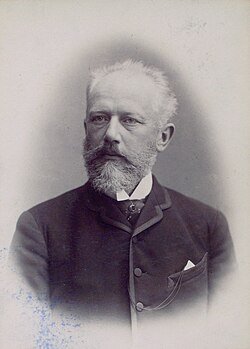
Pyotr Ilyich Tchaikovsky was born in 1840 and is one of the greatest composers of the romantic era. He composed six symphonies, ten operas (being Eugene Onegin his most famous piece) and several concertos, but it is in the ballet world that he earned the title of grand maestro. He composed three of the most popular ballets in the Romantic repertoire: Sleeping Beauty, The Nutcracker, and Swan Lake
The world he was writing for, however, had very different expectations of what a ballet score should be, and the relationship between the two was not always the rich, symbiotic one we might assume. For the most part of history, Ballets were choreographed over « functional » scores, primarily composed by « specialists » to support dancers movements, making it rhythmic but not particularly rich in melodies or symphonies. Productions like La Sylphide and Giselle, still staged today, endure largely on the strength of their narratives and choreographies rather than their scores.
Therefore, getting a composer of Tchaikovsky’s stature to write a ballet score was simply not the norm. Nonetheless, he took over the job commissioned by the Moscow Bolshoi Ballet in 1875 as he was eager to push ballet music forward. He was passionate about ballet and theater, and was very aware of all the different dance styles popular at the time, having waltzes and mazurkas as source of inspiration. Unlike his contemporaries composers, he had studied ballet scores seriously, developing an admiration for the specialist composers and their deliberate use of melody and theme to outline character arcs and moods
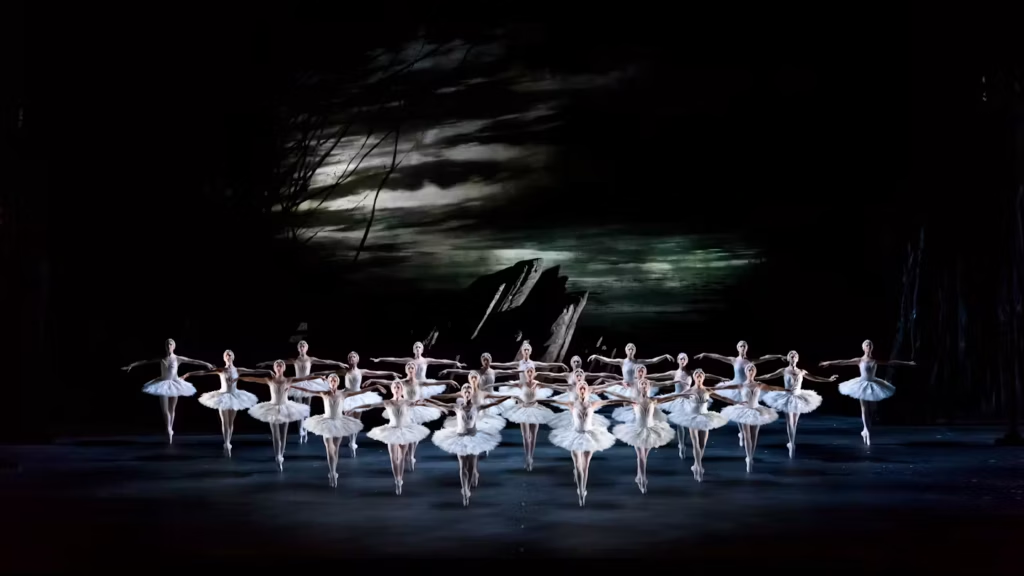
He did not disappoint as he took this opportunity and proceeded to write one of the most famous ballets of all time. Tchaikovsky poured himself into the subject matter, borrowing techniques from existing ballet compositions while elevating them with the symphonic richness he was known for. The result was a score in which the storyline could be heard — melodies and themes tied to characters, their personalities, their fates
What had everything to be a blazing success turned out bittersweet. Swan Lake debuted in 1876, and the reviews were mixed. Some people found the score too complex and distracting to the dancing, others were so mesmerized by it that they could not pay attention to the choreography at all. Additionally, the choreographer challenged by the complex score did not manage to carry the narrative at the same level to the composition, with the dancers also complaining the score was too difficult to dance to. This left Tchaikovsky frustrated and led him to step away from attempting to compose another ballet for 13 years.
He agreed to compose another ballet once he met Marius Petipa, a french choreographer based in Russia, called by some the « Father of Classical Ballet”. They worked together on Sleeping Beauty, and unlike his previous experience they worked on crafting the score down to every beat and matching the dancer’s moves. Petipa was a revolutionary ballet master because of his sensitivity to music, and he understood how to work with symphonic compositions and translate those into the story told through the dance. As a result, the reception of Sleeping Beauty was more favorable, leading it to become the second most popular ballet in the repertory of the Imperial Ballet of Saint Petersburg.
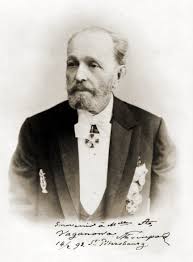
Their final collaboration, The Nutcracker (completed largely by Petipa’s assistant Lev Ivanov after Petipa fell ill) produced a score that lives in every ballet lover’s memory, and cemented one of the most consequential partnerships in the art form’s history.
It is that partnership that brings us back to Swan Lake. From its 1877 debut, the ballet was staged in Moscow for several years, cycling through various reiterations, with shifted structures, and changed choreographies. It only ascended to the iconic status we know today on 1895, when Petipa staged his own version. That production introduced the elements now considered definitive: Odile’s 32 fouettés, the intricate corps de ballet work, the beloved Little Swans pas de quatre. It is, essentially, the version still performed on stages around the world today
Unfortunately, Tchaikovsky did not live to see it. He died before the 1895 premiere in Saint Petersburg. But his legacy endures, not only in the ballets themselves, but in the doors he opened for composers like Stravinsky and Prokofiev, and in the inspiration his partnership with Petipa gave to the next generation of ballet masters, including George Balanchine, whose contribution to the art form deserves a story of its own
Ballet cannot exist without music — but it was the collision of ballet with truly great composed music that pushed the art form into something transcendent. As a ballerina myself, I know firsthand that dancing to a beautiful score is more than a technical challenge. It is a way of exploring the crossing of art forms, of conveying narrative through your body, of building artistry. The memories it creates and the ways it changes you, as a dancer and as a person last forever.
Sources
De Kroon, Maarten. « The Music of Swan Lake. » Nationale Opera & Ballet, 30 March 2023. www.operaballet.nl/en/articles/music-swan-lake
Vratz, Christoph. « Composing Against the Darkness: Pyotr Ilyich Tchaikovsky and Ballet. » Berliner Philharmoniker. www.berliner-philharmoniker.de/en/stories/pyotr-ilyich-tchaikovsky-and-ballet
Irvine, Amy. « The Fascinating History of Swan Lake: Tchaikovsky’s Greatest Ballet. » History Hit, 1 November 2022. www.historyhit.com/culture/1877-first-performance-swan-lake
Rodriguez, Renee. « Swan Lake: A History. » Ballet Arizona, 18 October 2024. www.balletaz.org/swan-lake-a-history
Carmon, Joseph. « Marius Petipa at 200. » Pointe Magazine. 10 June 2018 www.pointemagazine.com/marius-petipa-at-200